How the Right School Environment Builds Confidence In Children
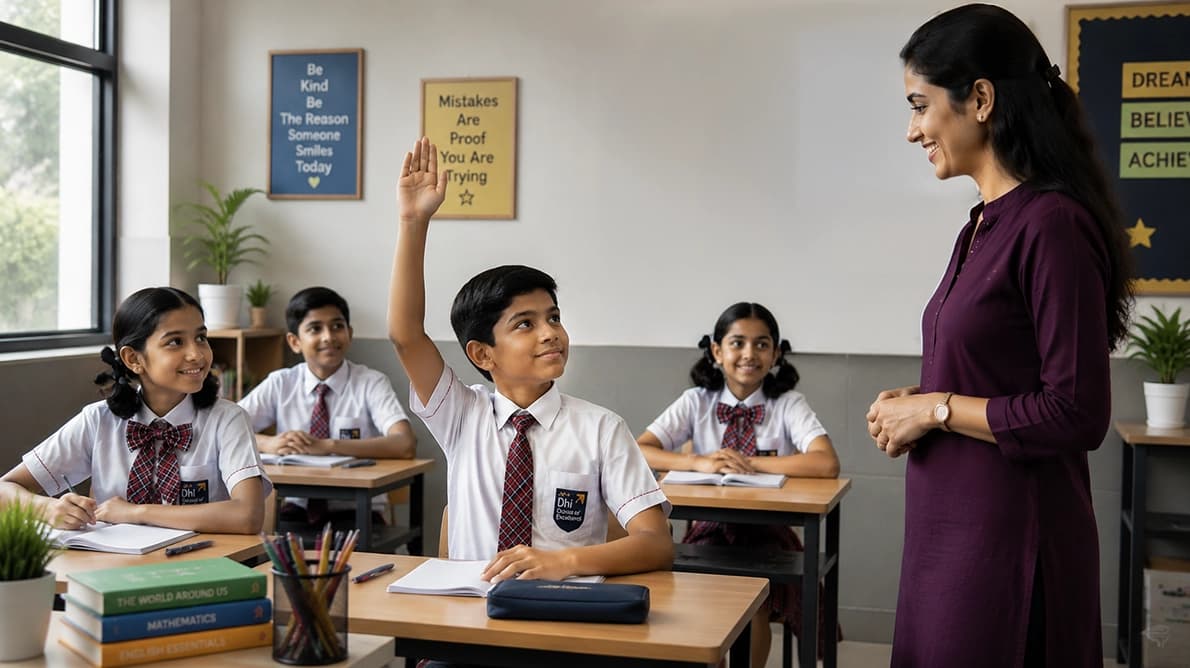
Children do not suddenly become confident because they scored well in a test or won something on stage. Most of the time, confidence begins quietly. It grows in small moments. A child raises a hand without fear. A teacher listens patiently. A mistake is not treated like failure. Slowly, the child begins to feel safe enough to try again. That is usually where building confidence really starts. Not through pressure, but through the feeling that learning is allowed to be messy sometimes.
Many parents spend time searching for answers about how to build self-confidence or how to build confidence in children, but the environment around the child often matters more than people first realise. Children absorb the mood of a school almost every day. If the environment feels tense or overly competitive, children notice it even when nobody says anything directly. A calm and thoughtful school atmosphere changes the way children see themselves.
The Way Children Learn Changes The Way They Feel
Some children speak confidently from a young age. Others stay quiet for years before opening up. A good school understands and respects the differentiation without trying to force them into one mould. At Dhi, we have seen how children become more comfortable when learning feels natural instead of rushed. This is why we focus strongly on exploration, discussion, and participation instead of only memorising information. Simple things like storytelling, group discussions, projects, and play-based learning activities often help children express themselves more freely.
Confidence grows when children feel involved. This is the reason why only correct answers should not be rewarded. Children need room to question, wonder, and even disagree respectfully. Real learning becomes possible when children stop fearing embarrassment. That is where critical thinking exercises become important too. They teach children to think independently instead of waiting for approval and validation by others. Over time, that independence slowly becomes self-belief.
Children Need To Feel Seen
There is something deeply important about personal touch in schools. Children know when adults genuinely notice them. A child who struggles in mathematics may quietly shine in art, music, sports, or public speaking. When schools recognise only academic success, many children begin to feel invisible. Confidence weakens quietly in such situations. At Dhi, we try to create spaces where children can discover different talents present in them. Some children become more expressive through theatre. Some through football. Others through design projects or science experiments. Growth rarely looks the same for every child.
This is the reason activities outside the four walls of the classrooms matter. Sports, arts, innovation labs, leadership forums, and student collaborations often become unexpected spaces for building self-confidence. Even simple classroom participation can slowly become one of the most meaningful confidence-building activity for children who once avoided speaking altogether.
A School Environment Should Feel Balanced
Sometimes schools become so focused on performance that children begin connecting their worth only to marks. That pressure stays with them longer than adults expect. A balanced environment feels different. It still values discipline and learning, but children are not made to feel afraid all the time. At Dhi School of Excellence, we believe confidence develops when children experience both structure and freedom together.
Our integrated Cambridge and CBSE framework encourages curiosity while also building strong academic foundations. Children are guided carefully, but they are also trusted to think independently. This balance matters because confidence is not loudness. It is not perfection either. Often, it simply means a child feeling capable enough to face something unfamiliar without shutting down. That feeling stays with them beyond school years.
Why Environment Matters More Than Parents Sometimes Expect
Parents usually look at infrastructure, results, or curriculum while choosing schools. Those things matter, of course. But children remember emotional experiences more deeply than adults think. They remember how the teachers treated them, how every mistake was celebrated and learning was joyful and not exhausting.
At Dhi, we often speak about the 5 Cs — curiosity, creativity, communication, critical thinking, and confidence. These are not just ideas written on walls. They shape how children experience everyday school life. A child who learns communication skills early naturally becomes more comfortable socially. A child encouraged to explore creatively usually becomes less afraid of failure. A child trusted to think independently often develops stronger emotional resilience too. Over time, these become quiet yet lasting tips to build self-confidence in everyday life.
Why Dhi Feels Different For Many Families
Among the best International schools in Kuntloor, Hyderabad, we at Dhi try to create something children can emotionally grow inside, not just academically survive through. Our campus is designed to feel open, safe, and calm because surroundings influence learning more than people realise. Green spaces, interactive classrooms, extracurricular activities, and personal touch all work together to create a healthier learning environment for children.
We believe learning should feel connected to real life. That is why project-based learning, STEAM integration, leadership programmes, and experiential activities are part of everyday education here. Children are encouraged to question, collaborate, and communicate openly instead of learning passively. We also understand that confidence develops differently at different ages. Younger children benefit from sensory exploration and joyful discovery. Older students need responsibility, mentorship, and opportunities to think deeply about the world around them.
As admissions open for the academic year 2026–2027, many families are looking carefully at what kind of environment truly helps children grow. At Dhi, the best CBSE schools in Kuntloor, Hyderabad, we want children to not only be knowledgeable, but also emotionally stronger and more secure. Every programme around confidence-building is woven naturally into daily learning here, not as separate lessons.
Final Words
Children may forget parts of what they studied years later. But they rarely forget how a place made them feel. A good school environment quietly shapes the inner voice children carry into adulthood. If children constantly feel judged, they become hesitant. If they feel supported, they slowly become more open, curious, and secure. Confidence is built slowly in ordinary moments, through a thoughtful teacher, a classroom where questions are welcomed, and a school that values individuality instead of constant comparison. That is why choosing the right school matters. Not because children need a perfect future planned for them, but because they deserve spaces where becoming themselves feels safe. With school admission open, this is the right time for parents to choose a learning environment that truly nurtures both confidence and character.