How Play-Based Learning Builds Strong Foundations in Kids
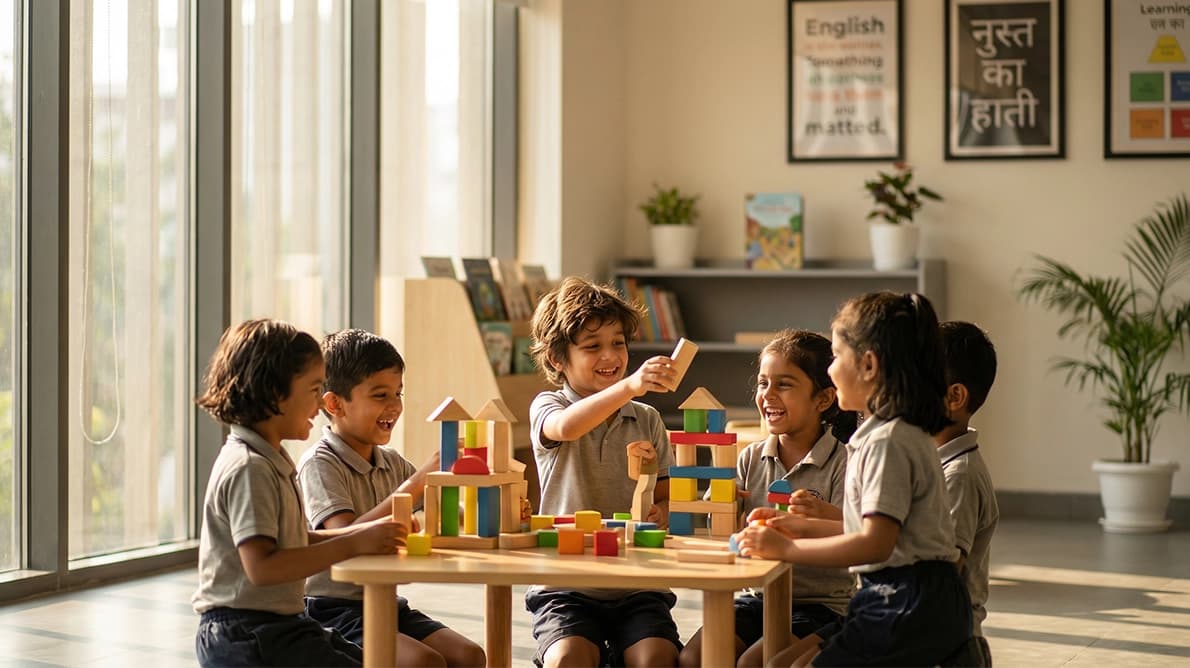
It’s simple to believe education occurs when a child is either looking at a book, repeating something they were told, or sitting still. That image seems recognizable. However, there is another idea, play-based learning, that many people are talking about and seems ridiculously simple. Student’s Play as part of Learning? The more you spend time with it, the more sense it will make. When a child is watched closely, it’s easy to see how confusing play and learning become. A child building something out of blocks isn’t just passing time. There’s thinking, testing, failing, trying again. It doesn’t look like a lesson, but something is definitely happening. Maybe that’s the starting point for understanding what play-based learning is. It’s not about adding play after learning. It’s about seeing that play itself is learning.
What Happens During Play That We Often Miss
There’s something honest about how children play. Kids are curious and aren’t told to be – they just are. Through a child’s imagination of running a shop, he is instinctively learning conversations. Another child is not memorising anything while mixing colours but is still figuring out cause and effect. These small moments can often be overlooked, however they build something bigger than answers. Benefits of play-based learning may not be apparent right away, but which ultimately yield results. Confidence develops gradually. Solving problems becomes instinctive. Even frustration, when something doesn't work, becomes a lesson in itself. Play-based learning continues to dominate discussions around early childhood education for a variety of compelling reasons. It enables children to learn without the experience of being taught. At Dhi School of Excellence, we craft moments of play that lead to gentle learning, allowing children to grow at their own pace.
Why Early Years Matter More Than They Seem
There’s a lot of importance to early childhood learning. Not in a stressful way, but in how much gets shaped during that time. The importance of play-based learning in early childhood isn’t really about getting ahead. It’s more about building comfort with learning itself. When a child feels safe to learn, to ask, to make mistakes, something strong begins to form underneath. That’s probably why play-based learning activities in kindergarten often look so simple on the surface. Playing with sand, storytelling, role-play, and puzzles. Nothing looks complicated. But maybe it doesn’t need to. These moments are less about outcomes and more about habits, like how a child approaches something new, whether they feel curious or hesitant, or whether they give up quickly or stay with it a little longer.
Learning Without a Feel of Learning
A play-based learning curriculum is delicate in nature. It doesn’t rush. It doesn’t push too hard. Instead of forcing information in, it creates space where learning can happen naturally. A child counting blocks doesn’t feel like they are doing math. A child drawing doesn’t feel like they are practising skills, and yet, both are happening. This kind of approach sometimes feels uncertain to adults. There’s a worry: Is enough being learned? But maybe the question itself needs adjusting. Instead of asking how much is being taught, it might help to ask how deeply a child is engaging. Because real learning tends to stay when it’s discovered, not delivered.
Where Schools Fit Into All This
Not every school looks at learning this way, and that’s where things can get a bit confusing for parents. Some schools try to balance structure with freedom. It is sometimes said “learning to be global” or “inculcating Indian values” or “purpose-driven learning” – they sound meaningful but are abstract. They try to blend academic growth with real-world thinking over time. Some approaches, like the 5C Learning Framework, emphasize skills like creativity, communication, critical thinking that are complementary to play.
For someone exploring options, especially around places like Kuntloor, names like the Best International Schools in Kuntloor, Hyderabad or even the best CBSE schools in Kuntloor, Hyderabad might come up often. The labels matter less than the approach, though. Whether the school allows room for curiosity is probably the more useful question. Even when searching for something practical like a CBSE school near Nagole or a CBSE school near LB Nagar, the same thought applies. Does the environment feel open enough for a child to learn?
It’s interesting how even schools near areas like CBSE school near Dilsukhnagar, CBSE school near Hayathnagar, or CBSE school near Uppal are slowly including more play-based learning activities into their daily routines. It’s becoming less of an alternative and more of a quiet shift in how learning is understood. Sometimes, you even see simple signs like “admissions open,” but what really matters is what happens inside those classrooms. We at Dhi School of Excellence bring together global exposure and strong Indian values, creating a space where children learn freely while staying deeply rooted.
Where Global Learning Meets Personal Care
At Dhi School of Excellence, we see learning as something more than just academics. We try to build an environment where children feel understood, supported, and gently guided. Our experienced leadership and faculty bring both structure and warmth into everyday learning. With a curriculum that blends CBSE and Cambridge approaches, we keep things engaging and meaningful. From well-planned activities to modern infrastructure, everything is designed with care. What matters most to us is the personal touch we create with each child, because when they feel seen and encouraged, learning begins to unfold naturally.
Final Thoughts
Maybe the idea of play as learning feels uncertain because it doesn’t look structured enough. There’s no clear line between effort and enjoyment. But that might be the point. When children learn through play, they aren’t separating thinking from feeling. They’re using both at the same time. And that seems to build something steadier than memorising answers. Over time, this kind of learning doesn’t just help in school. It shapes how a child approaches life itself. With curiosity, patience, and a willingness to try. And maybe that’s what strong foundations really look like. Not just knowing things, but knowing how to learn them.