Why Critical Thinking is the Most Important Skill for Students Today
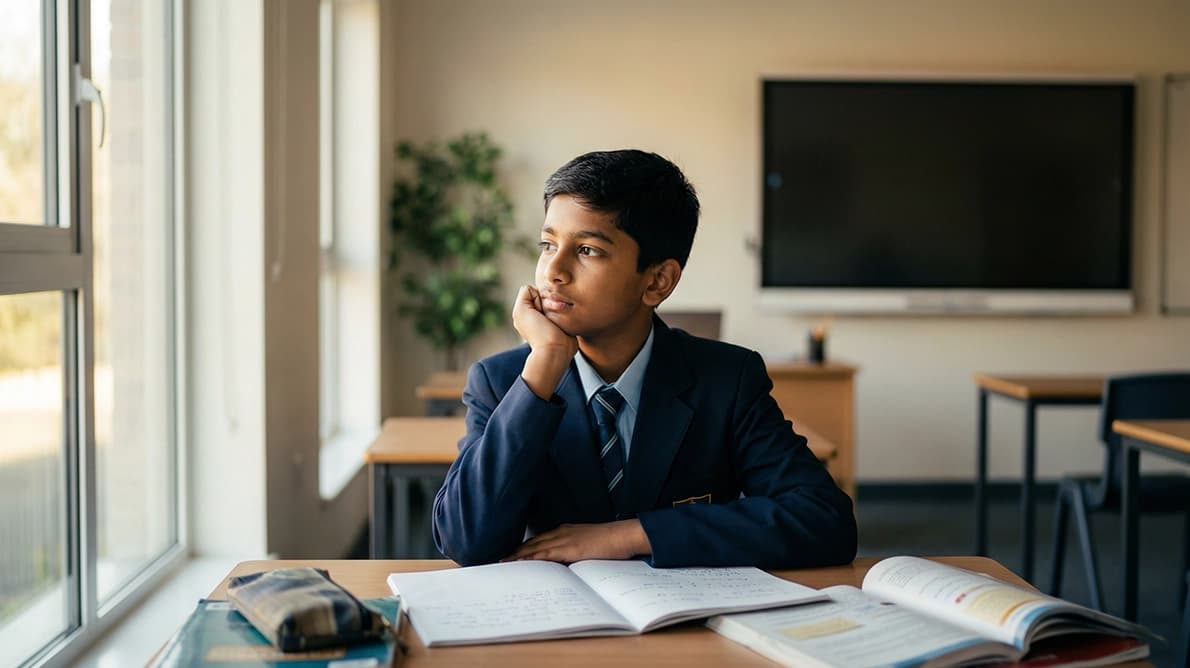
There’s a feeling that something about learning today doesn’t fully work. Not in a dramatic way, just a small, nagging sense. Students memorise, repeat, score well sometimes and still feel unsure when faced with real questions. Maybe that’s where critical thinking starts to matter. Not as a big concept, but as a simple habit of pausing and asking, “Does this make sense?” It sounds basic, almost too basic. But it’s strangely missing in many classrooms.
What It Really Means To Think Critically
When someone asks what is critical thinking, the answers often sound complicated. Analysis, evaluation, reasoning are all correct, but they feel distant. At its core, it’s simpler. It’s the ability to not accept something immediately, to look at it, turn it around a little, and decide what to do with it. A student solving a math problem without understanding it isn’t thinking critically. But one who stops, even briefly, to check why a method works, that’s different. That small pause changes everything. We, at the Dhi School of Excellence, gently guide students to question, reflect, and understand concepts deeply rather than accepting them at face value, making critical thinking a natural habit.
Why It Feels More Important Now
Information is everywhere now, too much of it, actually. Students don’t struggle to find answers anymore. They struggle to know which answers to trust. That’s where the importance of critical thinking becomes obvious. Without it, information just piles up without meaning anything. It’s not just about school either. News, social media, opinions, everything blends together. Without some level of questioning, it’s easy to believe things that aren’t even close to true. So the skill isn’t about being smarter. It’s about being careful.
Learning Beyond Memorising
Some schools have started noticing this gap. Not loudly, not perfectly, but in small ways. You hear phrases like 5C Learning Framework or ideas around purpose-driven learning, and at first, they sound like just another set of school terms. But underneath, there’s an attempt to shift focus, from remembering answers to understanding them. The same goes for concepts like Global Education Indian values, where the aim isn’t just academic success but helping students think in a broader, more connected way. Still, the change feels slow. Maybe because it’s easier to teach answers than to teach thinking. We believe learning should go beyond memorisation, and at Dhi School of Excellence, we actively blend global exposure with Indian values to help students truly understand and apply what they learn.
Neither of the option is better. It simply depends on what kind of environment might help a particular child feel engaged rather than pressurize. At Dhi School of Excellence, we blend global learning approache with strong Indian values where students grow not only academically but also through creativity, exploration, and real-world experiences.
Where Creative Thinking Fits In
There’s also some confusion between critical and creative thinking. People often treat them like opposites. But they aren’t. Creative thinking is about coming up with ideas. Critical thinking is about examining them. One without the other feels incomplete. Understanding the difference between critical thinking and creative thinking helps here. One asks, “What if?” The other asks, “Does this work?” Together, they shape better thinking. That’s why discussions around critical thinking and creative thinking keep showing up in modern education conversations. It’s not about choosing one. It’s about letting both exist at the same time.
Small Ways Students Can Build It
The idea of improving critical thinking skills can feel vague. But it doesn’t have to be. Sometimes it’s just asking an extra question. Sometimes it’s trying a different way to solve something. Sometimes it’s okay with not knowing right away. Even simple critical thinking exercises, like comparing two ideas or explaining something in one’s own words, can slowly build the habit. Over time, these small actions turn into a way of thinking.
It Changes How Problems Are Seen
One of the most practical sides of this is how it affects problem-solving. Students who rely only on memorised methods often get stuck when something changes slightly. But those with critical thinking and problem solving abilities tend to adapt better. They don’t panic as quickly. They look at the problem differently. It’s not that they always get it right. They just don’t stop at the first difficulty.
Schools Are Talking About It
If you look at school’s environment today, especially places often described as the best international schools in Kuntloor, Hyderabad or even the best CBSE schools in Kuntloor, Hyderabad, there’s a noticeable shift in how learning is being discussed. You’ll hear parents searching for a CBSE school near Nagole or a CBSE school near LB Nagar, not just for academics, but for overall development. Others look for a CBSE school near Dilsukhnagar, or even farther, like a CBSE school near Hayathnagar or CBSE school near Uppal, hoping to find a place where children are encouraged to think, not just perform. Sometimes, these schools highlight that admissions open, but what they’re really trying to show is something deeper, a different way of learning. Whether they fully achieve it or not is another question. But at least the direction seems to be changing.
Where Learning Feels Personal and Purposeful
At Dhi School of Excellence, we don’t see education as something that fits into a fixed mold. We grow it around each child. We bring together a strong academic foundation with a curriculum that feels engaging, relevant, and thoughtfully designed. Our classrooms are supported by experienced educators who understand when to guide and when to step back. Alongside this, we create spaces where students feel motivated, heard, and supported. With modern learning resources and a warm, personal approach, we try to ensure that every child not only learns well but also feels confident and comfortable in their journey.
Final Thoughts
Maybe the reason critical thinking feels so important today is because everything else is changing so quickly. Careers, technology, even the way people communicate, it's all moving faster than before. In that kind of world, memorised answers won`'`t last very long. But the ability to think, question, and adapt, that stays useful. And maybe that’s the real point. Not to turn students into perfect thinkers, but to help them stay steady in a world that doesn’t always make sense. At the end of it all, critical thinking doesn’t need to feel like a heavy skill. It’s just a habit, a small one, to pause, to question, and to understand before accepting. And maybe that’s enough.