How Safe And Student-Friendly Campuses Improve Learning Experiences
There is a question that comes up quite often when parents look at schools. What actually helps children learn better? Most people start with academics. Some think about teachers. Others look at facilities or curriculum. All of those things matter, of course. But after looking closely at how children spend their school years, another factor quietly enters the picture, the environment. Not in a complicated way. Just the simple feeling a child gets when they walk into school every morning. Do they feel comfortable there? Do they feel welcome? Do they feel safe enough to participate without constantly worrying about getting something wrong? Those things may sound small, but they seem to shape the entire learning experience.
Learning Changes When Children Feel Secure
Children notice more than adults sometimes realize. They notice whether a space feels friendly. They notice how people speak to them. They notice whether they are encouraged to ask questions or simply expected to stay quiet. When students feel uncertain, learning can become something they just get through. They attend classes, complete assignments, and move from one lesson to the next. But when they feel secure, something shifts. They become more curious. They volunteer answers more often. They join discussions. They are less afraid of making mistakes. A safe campus does not magically make every child confident overnight. It simply creates an environment where confidence has room to grow. That difference can be surprisingly important over time.
School Is About More Than Lessons
Sometimes education gets reduced to subjects and exams, math, science, languages, and tests. Yet when people think back to their own school days, many of their strongest memories usually come from somewhere else, like a project, a competition, a school event, or a conversation with friends. Learning often happens in those moments too. This is where the importance of learning through experience becomes easier to understand. Children tend to connect more deeply with ideas when they are actively involved rather than simply listening. At Dhi School of Excellence, we have always felt that learning should involve exploration. Students learn differently when they are encouraged to ask questions, experiment, and discover things for themselves. Sometimes understanding grows from doing, not just studying.
The Things Outside Classrooms Matter Too
It is interesting how often people describe activities as separate from education. In reality, many students learn some of their most valuable lessons through experiences beyond regular lessons. That is one reason extracurricular activities in school continue to play such an important role. A child might discover leadership through club activities for students. Another might learn discipline through sports. Someone else may find confidence while performing on stage. These experiences stay with students. Many extracurricular activities for students teach qualities that are difficult to develop through textbooks alone. Teamwork, responsibility, resilience, and communication often grow through participation rather than instruction. At Dhi, we believe these opportunities deserve the same attention as academic learning because both contribute to a child's development.
Small Moments Often Teach The Biggest Lessons
Not every meaningful experience has to be something major. Sometimes growth happens during ordinary parts of the day with a- A classroom discussion. A group task. A presentation. A shared project. Many activities for students in the classroom are valuable because they encourage participation. Students stop being passive listeners and become part of the learning process. The same can be said for educational activities for students, which help connect ideas to practical understanding. Then there are group activities for students. These often look simple from the outside, but they teach children how to cooperate, share responsibilities, and listen to different viewpoints. It is also where communication activities for students and speaking activities for students quietly become useful. The ability to express thoughts clearly is something students continue using long after school is over. The interesting part is that these skills often develop gradually. Children may not even notice they are learning them.
Friendships Shape The School Experience Too
School is one of the first places where children spend significant time with people outside their families. That experience matters. Students learn how to work with different personalities. They learn how to solve disagreements. They learn how to support one another. Many social activities for students help create these opportunities naturally. The same is true for fun activities for students. They may seem light-hearted, but they often help children feel connected to their school community. Then there are team building activities for students, which encourage cooperation in a way that feels practical rather than theoretical. When students feel like they belong, school becomes a very different experience. And belonging is something that cannot be measured through exam scores.
Looking Beyond Academic Success
Parents today often seem to be looking for something broader than strong grades alone. Good academics still matter. That has not changed. But many families also want children to develop confidence, independence, and practical abilities they can carry into adulthood. This is where life skills activities for students become important. Learning how to make decisions, solve problems, work with others, and take responsibility can be just as valuable as academic knowledge. These experiences contribute to the development of important child development skills, helping students become more capable and self-aware over time. The goal is not simply to prepare children for the next test. It is to prepare them for life beyond school.
Why We Focus On This At Dhi School Of Excellence
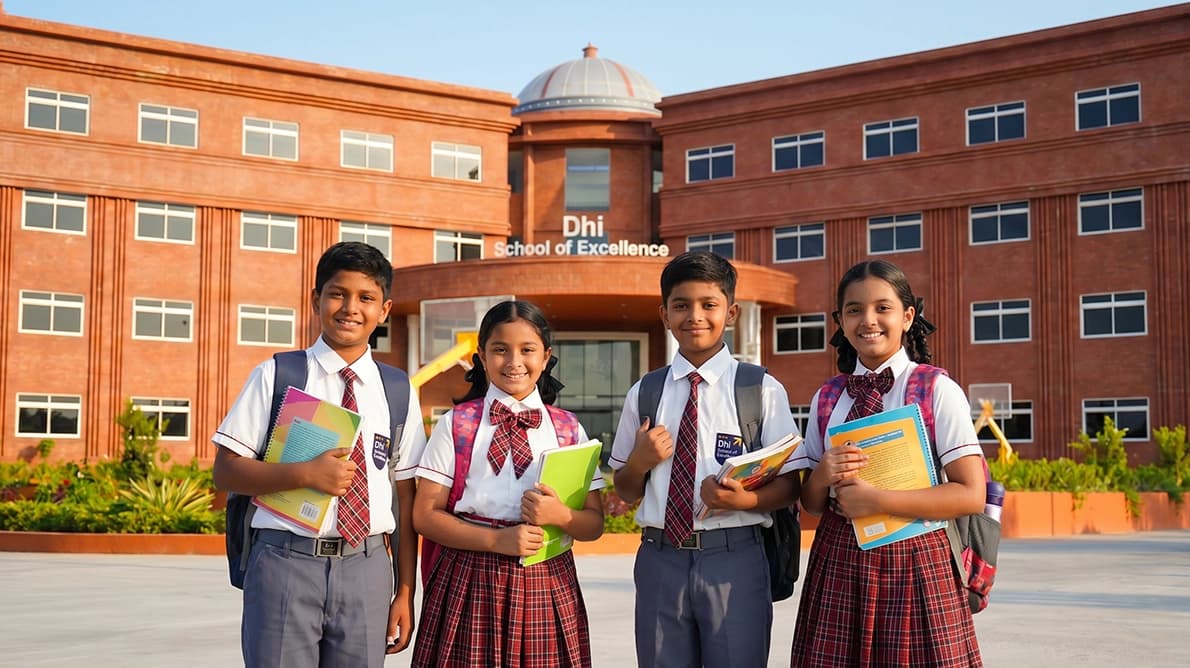
At Dhi School of Excellence, we have never viewed education as something limited to classrooms alone. As one of the best international schools in Kuntloor, Hyderabad, we work to create an environment where students feel supported, challenged, and encouraged to grow. Our secure 4.5-acre campus, open green surroundings, project-based learning approach, and integrated Cambridge and CBSE curriculum all come from the same belief. Children learn best when they feel comfortable enough to explore their potential. We focus strongly on academics, but we also value experiences beyond academics. Sports, arts, leadership programmes, innovation projects, competitions, cultural celebrations, and a wide range of activities all form part of the student journey. Being recognised among the best CBSE schools in Kuntloor, Hyderabad is meaningful to us because it reflects our commitment to balanced learning rather than narrow achievement. For families currently exploring options while school admission open announcements are underway, the search is often about finding the right environment as much as finding the right curriculum. At Dhi, we try to create a place where children can learn with confidence while staying connected to strong values and meaningful experiences.
Final Words
The more people think about education, the harder it becomes to separate learning from the environment. Children spend years in school. Those years shape how they think, communicate, build relationships, and understand themselves. That is why a safe campus matters. Not because safety is a feature, but because it becomes the foundation for everything else. When students feel secure, supported, and included, learning has a better chance to take root. And perhaps that is what a student-friendly campus really does. It creates the kind of space where children are free to grow into themselves while learning along the way.