How DHI School of Excellence Balances Academics and Activities for Students
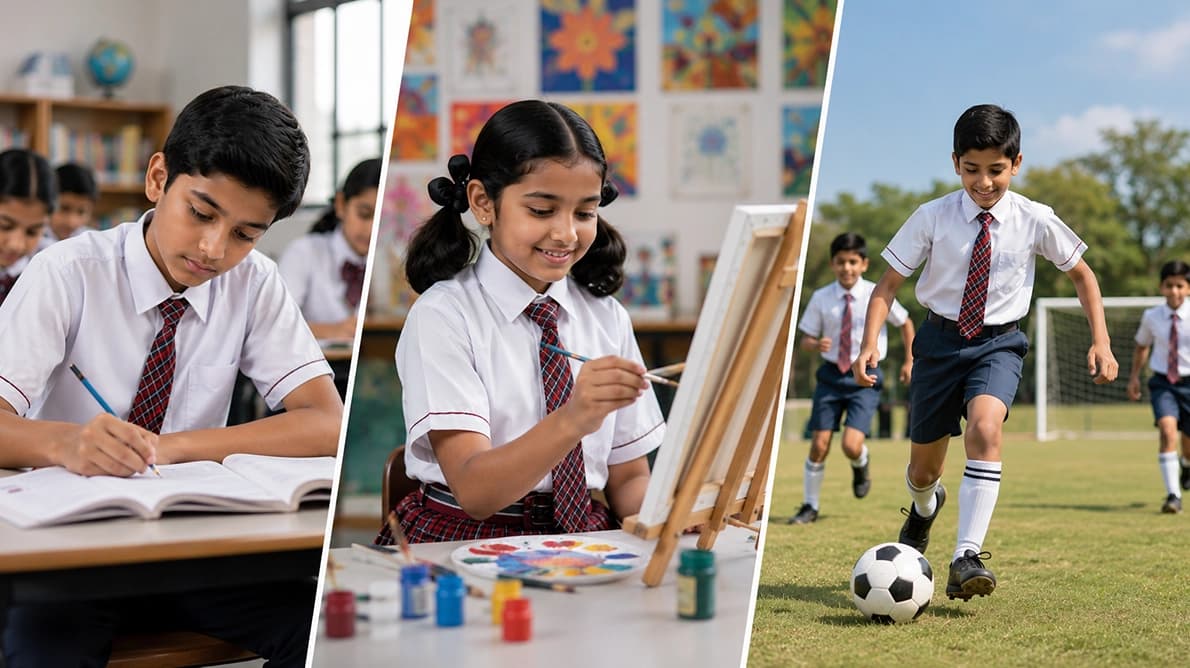
Parents usually look at marks first. That makes sense. A school has to teach well. But after a while, another question quietly appears in the background. What kind of person is a child becoming while learning all this? That is where Dhi School of Excellence feels a little different. We at Dhi do care about academics, but not in a way that turns school into a place of pressure alone. The idea seems to be that children learn better when they feel involved, heard, and connected to what they are doing. Maybe that is why the balance between studies and everyday experiences feels natural here instead of forced.
Recognised among the best International schools in Kuntloor, Hyderabad and also counted among the best CBSE schools in Kuntloor, Hyderabad, Dhi School of Excellence tries to build learning around the child, not only around the syllabus.
Learning That Does Not Feel Narrow
One thing that stands out at Dhi is how learning moves beyond memorising lessons. We at Dhi use a blend of CBSE and Cambridge frameworks, but the atmosphere around learning feels more open and thoughtful than rigid. Children are encouraged to ask questions, discuss ideas, and sometimes even slow down and think through problems instead of rushing toward answers. Those moments matter more than people realise. Real understanding often grows quietly.
A lot of this comes through critical thinking exercises, integrated project-based work, and classroom discussions that feel active rather than one-sided. Even simple communication activities for students and speaking activities for students seem to have a purpose beyond participation. Fun-filled activities for students help children become comfortable expressing themselves without fear.
The classrooms also do not feel disconnected from real life. We at Dhi try to make learning practical through exploration, experimentation, and inquiry-based methods. That probably explains why students appear more engaged instead of simply trying to finish work.
The Importance Of Activities In Everyday School Life
Sometimes schools treat activities like a break from real learning. At Dhi, they seem woven into the learning process itself. There are many kinds of activities for students, and they are not limited to annual events or occasional competitions. Some happen daily inside classrooms. Some happen outdoors. Some are quiet and reflective, while others are energetic and collaborative.
The younger children especially benefit from play-based learning activities where learning happens through movement, imagination, and interaction. It sounds simple, but children often understand concepts better when they experience them rather than just hear them explained. We at Dhi also include activities for students in the classroom that encourage teamwork, observation, and participation. These may look small from the outside, but they slowly shape confidence and curiosity over time.
There is also room for creativity. Art, design thinking, storytelling, innovation tasks, and hands-on projects allow children to think differently without feeling judged.
Growing Through Sports, Clubs, And Shared Experiences
A child can learn discipline from a textbook, but it usually becomes real while standing on a field, waiting for a turn, or learning how to lose gracefully. That is probably why the Dhi School of Excellence gives serious attention to sports and clubs. We at Dhi believe learning continues outside the classroom walls too. Students take part in football, basketball, athletics, yoga, taekwondo, indoor games, and many other programmes. These are not treated as distractions from academics. They are part of a child's overall growth.
The school also creates space for group activities for students, team building activities for students, and social activities for students that help children interact naturally with others. Some students become more confident here than they ever do during exams. What feels thoughtful is that not every child is pushed toward the same thing. Some enjoy the stage. Some prefer labs. Some connect through sports. Some simply need quieter spaces to grow. We at Dhi understand well that children shine in different ways.
Building Skills That Stay Beyond School
There is another side to education that often gets ignored because it is harder to measure. Things like emotional balance, communication, confidence, and decision-making rarely appear on report cards, but they shape adult life deeply. Dhi School of Excellence is aware of this. The focus on the 5 Cs — curiosity, creativity, critical thinking, communication, and confidence — keeps returning through different parts of school life. Not as slogans on walls, but through daily practice.
Children participate in educational activities for students that involve collaboration, presentation, and problem-solving. These experiences quietly support child development skills in ways that traditional instruction alone cannot. We at Dhi also understand that confidence grows slowly. It grows when children are entrusted with responsibilities, encouraged to speak, and allowed to make mistakes without embarrassment.
That may be why programmes like student-led conferences, educational trips, thematic assemblies, and student leadership programmes feel important here. They expose students to situations where they learn to think independently and communicate clearly. Even the emphasis on life skills activities for students feels grounded in reality instead of sounding fashionable. Schools cannot prepare children for every future challenge, but they can help them become adaptable and thoughtful people.
Why The Environment At Dhi Feels Different
There is something unique about the environment at Dhi that quietly shapes behaviour. Open spaces, safe classrooms, calm surroundings, and supportive staff change how children experience school every day. The Dhi campus in Kuntloor reflects this idea well. We at Dhi have created spaces where learning feels less boxed in. The green surroundings and thoughtfully designed infrastructure seem to support both focus and freedom at the same time.
Teachers here are not presented as authority figures alone. They are described more like mentors and co-learners. That changes the tone of education completely. Children often learn better when they feel respected rather than controlled. The school's philosophy also stays rooted in Indian values while still offering global exposure. That balance matters because children need both confidence in the wider world and connection to their own identity.
Dhi School Of Excellence And The Kind Of Childhood Parents Hope For
There is probably no perfect school because every child is different. Still, some schools make an honest effort to see children as complete individuals instead of only future exam results. The Dhi School of Excellence feels built around that thought. We at Dhi try to create a place where academics stay strong without making childhood feel heavy. Students study seriously, but they also explore interests, build friendships, join performances, play sports, travel, question ideas, and slowly understand themselves better.
Final Words
For parents looking for extracurricular activities along with meaningful academics for their children, the balance becomes important. A child spends 10+ years in a school. These years shape personality as much as they contribute to education. With admission open now and school admission open from Nursery to Grade 7 for the academic year 2026–2027 at Dhi School of Excellence, many families may be looking closely at what kind of environment truly helps children grow well. At Dhi, the answer seems less about choosing between academics and activities, and more about understanding that children probably need both equally.