Reading Time vs Screen Time: Which Is Better for Your Child's Growth?
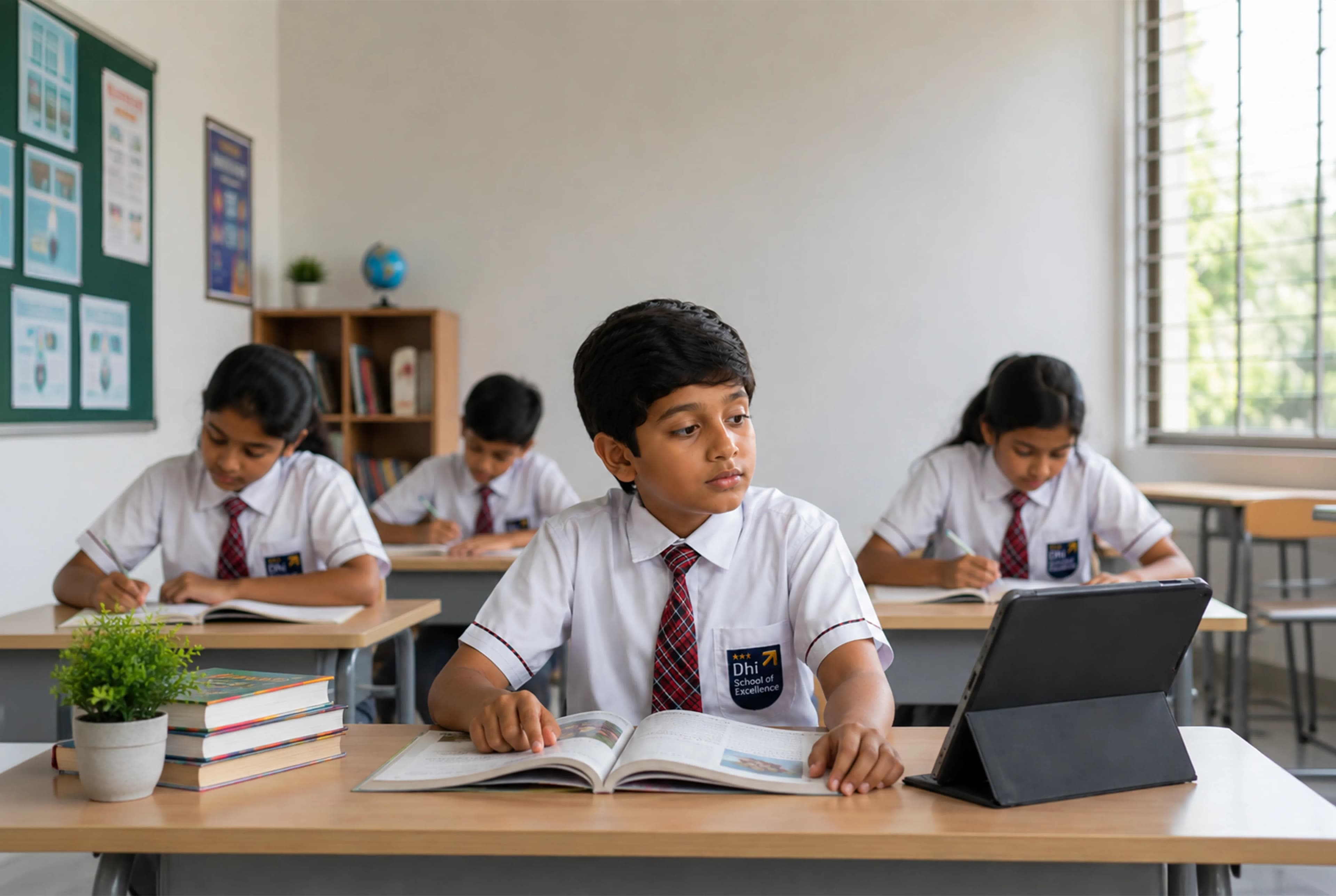
There is a phenomenon which most parents experience sooner or later. A child can sit for an hour and watch movies without getting tired, while when being asked to read for just 20 minutes, seems to be a mission. It raises questions about whether books have become outdated or whether they lack something that screens lack.
This is where the debate on reading time vs screen time actually starts. It does not mean trying to prove that one is ideal and the other is detrimental. In this era kids are born into a world where both are part of daily life.
Reading Gives Children Space To Think
Books move differently from screens.
A story does not rush. A chapter waits. A page stays exactly where it is until the child is ready to turn it. That slower rhythm matters.
When children read, they begin creating pictures in their own mind. A forest looks different to every reader. Each character has a face which depends upon the imagination of an individual.
This minor act of imagination might not seem like much now, but in the long run, it develops into creativity.
Reading helps develop patience among kids in a very silent way. Instead of expecting instant answers, they learn to stay with an idea a little longer.
That is probably one of the biggest differences in reading time vs screen time. Books ask children to participate. Screens often do most of the work for them.
Screens Are Not The Enemy Either
Sometimes people speak as though screens should disappear completely. That does not really match the world children live in.
Technology helps children discover things that books sometimes cannot explain easily. Watching the solar system move or seeing a volcano erupt through an educational animation can make learning exciting.
Good educational content has its place. Interactive lessons can also encourage curiosity. The problem usually starts when every free moment slowly becomes screen time.
Kids get accustomed to constant movement, fast sound, and instant gratification. Following that, being still and reading a book can be challenging, despite the fact that it was never meant to be compared to entertainment.
This is the reason behind reading time vs screen time being all about balance.
Growth Happens In More Than One Way
Academic marks matter. But children are growing in many other ways every single day.
- They are learning how to solve problems.
- They are learning how to express emotions.
- They are learning how to listen.
- They are learning how to ask questions.
None of these things happen through only one method.
Today, many parents who are looking for CBSE schools in Hyderabad have begun to focus on learning environments rather than the outcome of examinations. This means they would like to have schools where the children can be inspired to inquire, think independently, and remain curious.
This is where the process of global learning starts making sense. Global learning does not simply involve learning from other nations.
Global learning involves helping kids to think from different viewpoints but without forgetting their own viewpoints.
The Best Learning Often Happens Away From Both Books And Screens
This is something people sometimes forget. Children do not remember every chapter they read.
They also do not remember every educational video they watch. But they often remember experiences.
- A science activity.
- A music performance.
- Planting a sapling.
- Working together on a classroom project.
The reason behind their longevity is the participation of children instead of watching them.
It is for this very reason that extracurricular activities in school remain important. They allow children to identify their talent beyond what textbooks can teach them.
Good schools know that extracurricular activities in schools are not distractions from learning. They are part of learning itself.
Confidence Grows When Children Speak
Reading fills the mind. Speaking gives those thoughts and expressions.
Children who consistently tell stories, make suggestions, or engage in discourse gradually develop the habit of speaking their mind.
Confidence rarely develops overnight; it's a process.
It grows through practice. Simple speaking activities for students often make a bigger impact than people expect.
- Storytelling sessions.
- Classroom discussions.
- Role plays.
- Presentations.
- Assembly participation.
These everyday experiences help children organize their thoughts and communicate clearly.
That is one more reason the discussion around reading time vs screen time should never stop with books and devices alone. Children also need conversations, real ones.
Small Habits Shape Bigger Outcomes
Parents sometimes search for one perfect rule. Perhaps there isn't one.
Instead, small habits seem to matter more. Things like:
- Reading together before bedtime.
- Keeping books within easy reach.
- Choosing educational screen content instead of endless scrolling.
- Creating a little screen-free family time.
- Talking about stories instead of only finishing them.
None of these habits feel dramatic. Yet together they quietly build curiosity.
Children usually follow what becomes part of everyday life rather than what is forced occasionally.
Why We Believe Balance Matters At Dhi School Of Excellence
At Dhi School of Excellence, we have always felt that balanced learning is ideal for the growth of children.
As one of the most trusted CBSE schools in Hyderabad, we offer a combination of reading, proper technology integration, and experience that helps children grow with confidence.
Our philosophy of learning includes global learning along with traditional Indian values, because we think that children should know about the world but not lose themselves.
Books continue to play a very critical role in education within the four walls of our classrooms; however, they are complemented by projects, exploration, presentation, and extracurricular activities.
At Dhi School of Excellence we help children ask questions, think independently, speak confidently, and have fun with their learning process rather than completing their assignments.
Final Words
The debate over reading time vs screen time is likely to remain unresolved for quite some time to come.
There will always be new developments in technology. There will always be books lying quietly on bookshelves. There will always be children who require both direction and autonomy.
Perhaps the real objective is not about replacing the screen with the book, or the book with the screen. Perhaps the real objective is about teaching children when to slow down, when to discover, when to imagine, and when to simply wonder.
When the act of reading is accompanied by technology, discussion, creativity, expression and experience, children gain something more substantial than just knowledge.
They gain the opportunity to become intelligent, confident, and empathic people.