How DHI School of Excellence Supports Overall Child Development
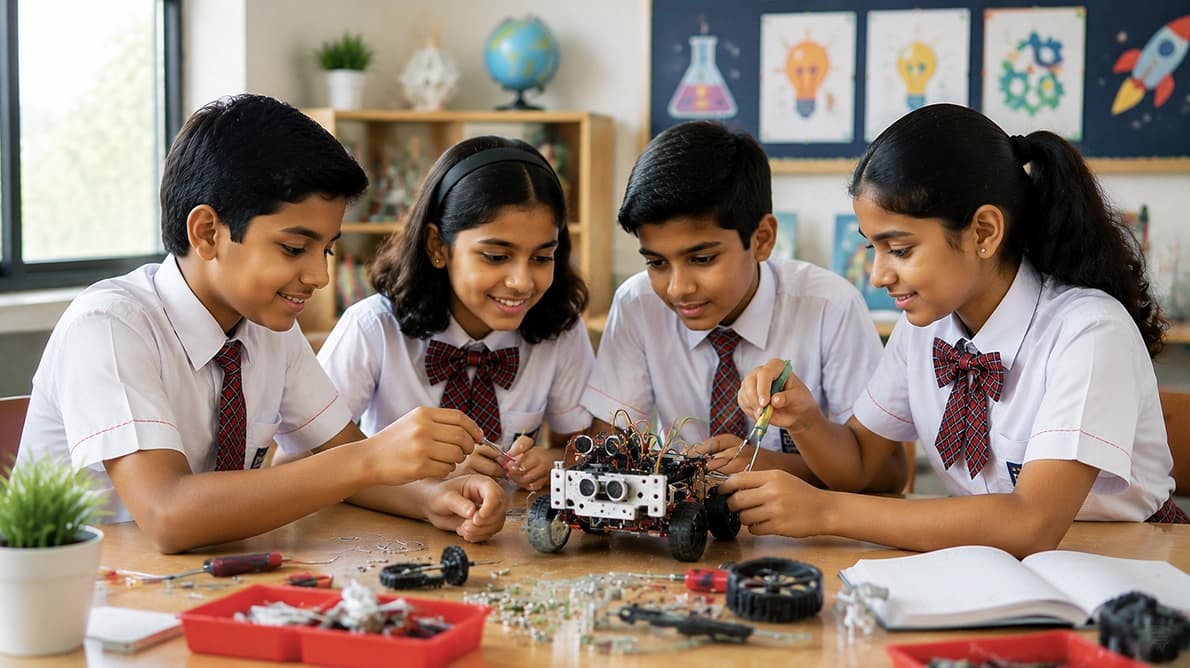
A lot of schools speak about marks, ranks, and results first. But when people quietly think about what child development is, the answer usually feels bigger than academics alone. Children are not growing in one direction. They are learning how to think, speak, respond, question, fail, recover, and slowly understand themselves. That process is often messy, uneven, and deeply human. At Dhi School of Excellence, this idea seems to sit quietly underneath everything else. We at Dhi do not treat learning like something that only happens within the 4 walls of a classroom.
The school is built around the idea that education should support the holistic development of a child, not just prepare students for exams. That difference may sound small at first, but over time, it changes how children experience school every single day. Being recognised among the best International schools in Kuntloor, Hyderabad and also among the best CBSE schools in Kuntloor, Hyderabad, probably comes from this balance. There is structure, but there is also space for children to grow naturally.
Children Grow In More Than One Way
People often talk about child growth and development as if it follows a straight line. But real growth rarely works that neatly. Some children speak confidently very early but struggle emotionally. Some are quiet observers who slowly become expressive later. Some understand concepts quickly but need help building confidence. At Dhi, learning seems designed with that understanding in mind. The school blends the CBSE curriculum with Cambridge frameworks in the early years, but the atmosphere around learning feels less rigid than many traditional systems. There is room for curiosity, questioning, movement, and reflection.
At Dhi the focus is on 5 Cs, curiosity, creativity, communication, confidence, and critical thinking, quietly connects to many well-known child development theories, even if those theories are never loudly announced in classrooms. Children learn better when they participate, explore, and feel emotionally safe. Most parents already sense this instinctively.
That may also explain why the school puts importance on play-based learning activities during the foundational years. Young children understand the world physically first. They touch,feel, repeat, pretend, build, break, and rebuild. These experiences shape attention, memory, emotional control, and communication more deeply than many people realise.
The Early Years Matter More Than People Think
The conversation around child brain development activities has become more common now, but sometimes it gets reduced to trends or fancy classroom tools. In reality, children often develop best through ordinary but meaningful experiences. At Dhi, the foundational stage from Nursery to Grade II focuses on sensory learning, movement, storytelling, exploration, and interaction. These are simple things, but they matter because early learning affects emotional security and cognitive growth together.
Even activities that look playful on the surface can become important child brain development games when they encourage observation, problem-solving, coordination, and social interaction. Children are not separating learning into categories the way adults do. For them, everything connects.
This becomes especially important while understanding different child growth and development stages. A five-year-old does not learn like a ten-year-old, and a teenager does not process emotions like a kid. Schools sometimes forget this and expect every child to fit into one standard setting. Dhi works against this habit by adjusting learning experiences according to developmental stages instead of only academic expectations.
Thinking Matters As Much As Memorising
One thing that quietly stands out at the Dhi School of Excellence is the emphasis on questioning. Not questioning for the sake of appearing smart, but genuine thinking. Children are encouraged to analyse, communicate, experiment, and connect ideas across subjects. This becomes visible through project-based learning, inquiry-driven classrooms, and different kinds of critical thinking exercises woven into everyday teaching. Sometimes schools say they encourage creativity, but children still feel afraid of making mistakes. Real thinking only happens when students feel safe enough to explore incomplete ideas.
At Dhi the use of STEAM integration and design thinking supports long-term child development skills that matter outside classrooms. Collaboration, communication, decision-making, adaptability, and emotional resilience are difficult to measure in exams, yet they shape adult life constantly. That may be part of the real importance of child development that people often overlook. Education is not only about preparing children for careers later. It is shaping how they carry themselves through life itself.
The Role of School and Home Cannot Be Separated
No school can fully shape a child alone. The role of parents in child development remains deeply important, even when children spend most of their day in school. What seems thoughtful at Dhi is that learning does not feel disconnected from family values or emotional grounding. The school combines global exposure with Indian values instead of treating them as opposites. Children are encouraged to become independent thinkers while still staying connected to empathy, discipline, mindfulness, and respect.
That balance says a lot about the role of school in child development. A school should not replace home. It should strengthen what children already need emotionally and socially while widening their understanding of the world. At Dhi, teachers are described more like mentors and co-learners than authority figures standing above students. That tone matters. Children learn differently when they feel guided instead of controlled.
Dhi School Of Excellence Feels Built Around Real Childhood
Some schools look impressive because of their buildings or brochures. Dhi School of Excellence focuses more on the feelings children carry while learning there. The open green campus, personalised attention, extracurricular activities, sports programmes, leadership forums, student exchange programmes, and experiential learning opportunities all connect back to one larger idea: children need different spaces to discover who they are.
We at Dhi understand that not every child shines in the same place. Some children find confidence on a football field. Others discover themselves through art, coding, public speaking, MUN discussions, yoga, theatre, or science projects. Growth often happens quietly in unexpected corners.
The school's structured child development program across different learning stages helps children gradually move from playful exploration into deeper academic and personal responsibility without making the transition feel harsh or mechanical. There is also something reassuring about the way the school speaks about wisdom, perception, and character alongside academic success. Those ideas feel increasingly rare now. Parents looking for school admission open updates or admission open opportunities are usually searching for more than a school seat. Most are trying to find an environment where their child will feel understood while growing up.
Final Words
The truth is, children remember feelings long after they forget lessons. They remember whether school felt safe, whether someone listened, whether curiosity was welcomed, and whether mistakes felt frightening or normal. The Dhi School of Excellence seems to understand that education is not only about producing high-performing students — it is also about helping children become thoughtful, balanced, emotionally secure people who can face the world without losing themselves in it. That may be the simplest way to understand real child development. It is not only about becoming smarter. It is about becoming more complete, little by little, in ways that cannot always be measured immediately.