Why Emotional Intelligence Is Essential for Every Child's Success
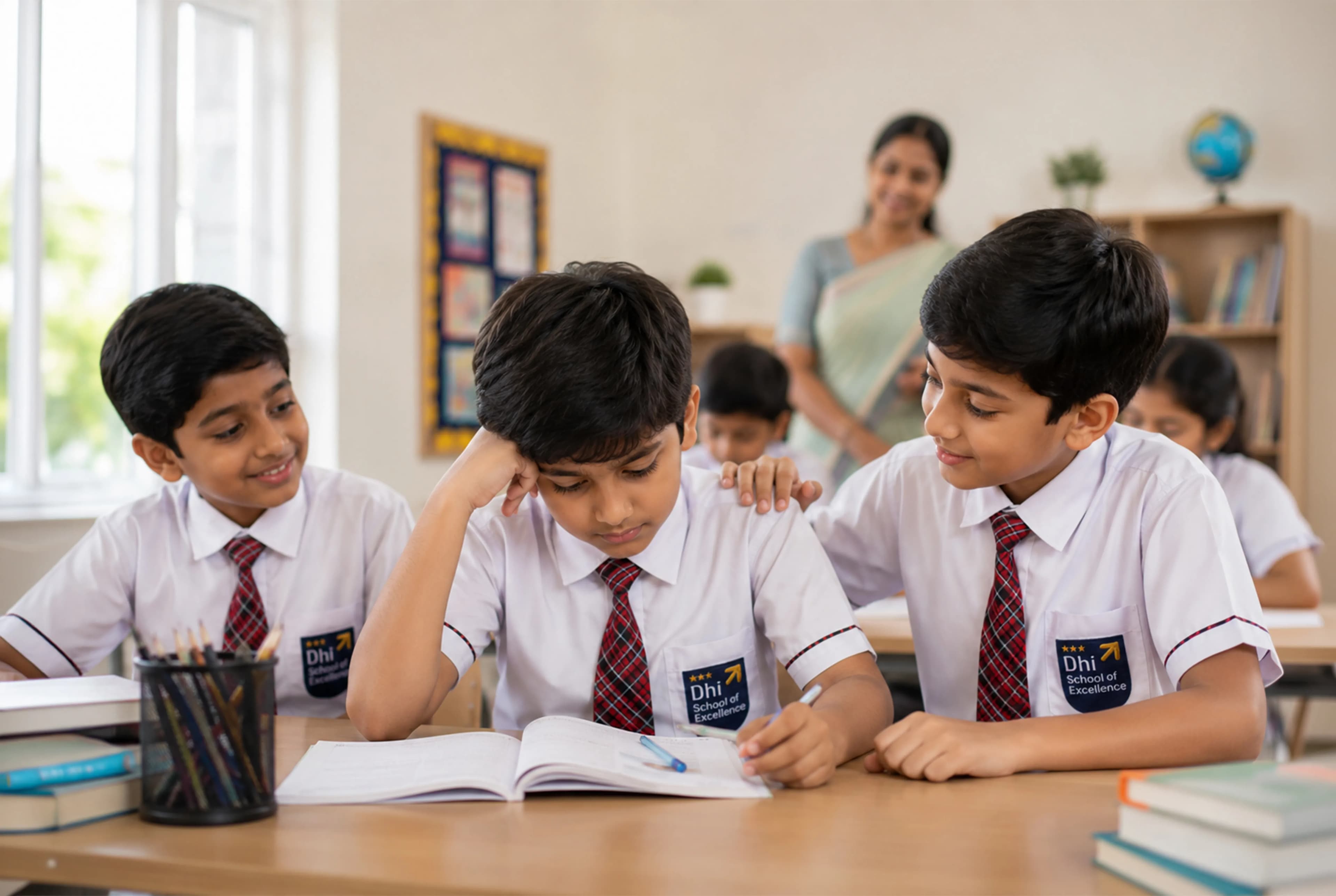
In the past, the success in academic institutions was judged in terms of scores. The high scores indicated success, and that was enough. But times have changed and people have realised there are other factors too.
Two children might have the same knowledge, yet they handled life very differently. One became upset after a small setback. The other took a deep breath and tried again. One found it difficult to work with classmates, while another naturally brought everyone together. It makes people stop and think about emotional intelligence.
Not because it is a new idea. It really isn't. It has probably always been there. We just speak about it more now. Once we raise the issue of what is emotional intelligence, it is hard to overlook the way it influences our lives on a day-to-day basis in many ways not easily noticeable.
Some Lessons Cannot Be Written In A Textbook
A child learns multiplication from a teacher. A child learns grammar from a book.
But where does a child learn patience after losing a game? Or kindness after hurting a friend's feelings without meaning to? Those lessons arrive differently.
Sometimes during lunch breaks. Sometimes after a misunderstanding. Sometimes on an ordinary Tuesday that nobody remembers except the child who learned something important from it that day.
That is probably why emotional intelligence feels different from many other skills. It grows quietly, almost in the background.
Perhaps this can be the easiest explanation for what is emotional intelligence as well. This is neither about suppressing one's emotions nor about ignoring them. This is about gradually making sense of what these emotions are communicating.
Children Notice More Than Adults Think
It is surprising how much children observe.
- They notice when adults stay calm.
- They notice when someone apologises.
- They notice when people interrupt each other.
- They even notice silence.
And that is precisely why emotional development is seldom a result of one single experience but rather something that happens during the most mundane situations, which, for that reason, often go unnoticed.
Things like:
- Waiting for someone else to finish speaking.
- Helping a classmate who is struggling.
- Accepting that not every game can be won.
- Learning that mistakes are uncomfortable but normal.
None of these moments feel dramatic. Still, they slowly build emotional intelligence, one small experience after another.
Confidence Does Not Always Look Loud
People often mistake confidence for being outspoken. But children are interesting.
Some are naturally talkative. Others think quietly before speaking. Both can be confident. Real confidence often shows up in smaller ways.
A kid who asks a question without being concerned that he may be wrong, attempts a hard thing without instantly giving up, and receives feedback without being discouraged.
This is where the importance of emotional intelligence becomes apparent. Children who comprehend their emotions usually find it easier to continue when things do not go as planned. And let's face it, things rarely go as planned.
Friendships Become Tiny Classrooms
School friendships are rarely simple.
Children argue. They make up. They misunderstand each other. Then somehow they become friends again.
Adults sometimes see these as small incidents. Children do not. For them, those moments are real.
Every disagreement teaches something. Every apology teaches something. Even sharing crayons with someone who forgot theirs teaches something.
The importance of emotional intelligence becomes clearer here because relationships ask children to think beyond themselves.
Books cannot completely teach that. Life does.
Leadership Usually Begins Much Earlier
Leadership sounds like something meant for adults, like, managers, team leaders, business owners, but perhaps it begins much earlier than that.
- A child inviting another child into a group game.
- Someone speaking kindly when others laugh.
- Someone choosing fairness instead of popularity.
That is leadership too. This is probably why people often connect emotional intelligence and leadership.
Leadership is not always standing in front. Sometimes it is standing beside someone who needs support.
Children who learn empathy often become the classmates others naturally trust. That quiet connection between emotional intelligence and leadership stays with them as they grow older.
So How Does It Actually Grow?
There is no single class where children suddenly become emotionally mature.
It does not happen like that. Instead, little things seem to help. Not because they are complicated. Because they happen regularly.
- Reading stories and talking about the characters.
- Listening instead of answering immediately.
- Encouraging children to solve simple disagreements.
- Giving them time to explain what they are feeling.
- Letting them make small mistakes without rushing to fix everything.
This is often how to develop emotional intelligence, slowly, and almost quietly.
Some days there may not seem to be much progress at all. Then one day, a child handles a difficult situation differently. That is when people realise growth has already begun.
The School Environment Matters More Than It Seems
Children spend years inside classrooms. That means schools quietly shape far more than academic knowledge.
- A supportive teacher.
- A respectful conversation.
- A project completed together.
- A safe place to ask questions.
These experiences stay with children much longer than many lessons. That is another answer to how to develop emotional intelligence.
It grows where children feel respected, heard, and encouraged to think for themselves.
Why We Value Emotional Growth At Dhi School Of Excellence
At Dhi School of Excellence, we have always held the belief that education should build character as well as knowledge.
This is why we encourage our kids to keep on asking questions, speak their minds, think critically, and develop confidence. Our classrooms are places where academic and life lessons are combined such that the students learn about themselves and the people around them.
In our efforts to bring together the CBSE curriculum and the Cambridge framework, we feel that education should be such that it prepares children not only for the larger world out there but also keeps them rooted in their values.
At Dhi School of Excellence, it is through project-based learning, collaboration, creativity and everyday dialogues that emotional intelligence is developed in children in a natural way. These do not appear as additional activities. They form an important part of developing oneself into a conscientious person.
Final Words
Success would mean something different to each child. Success might be for a child getting good marks in a test. To another child, it might mean gaining the courage to make that first speech in class.
To another, success could simply be learning to behave kindly after having done something wrong. These things do not generally show up in the grades that go home in report cards. Yet, these kinds of experiences last a lifetime.
That's the reason emotional intelligence is so vital. With emotional intelligence, children learn to be learners, playmates, members of teams and ultimately adults who know something about both the world outside and about themselves inside.