10 Brain-Boosting Games to Improve Children’s Memory and Thinking Skills
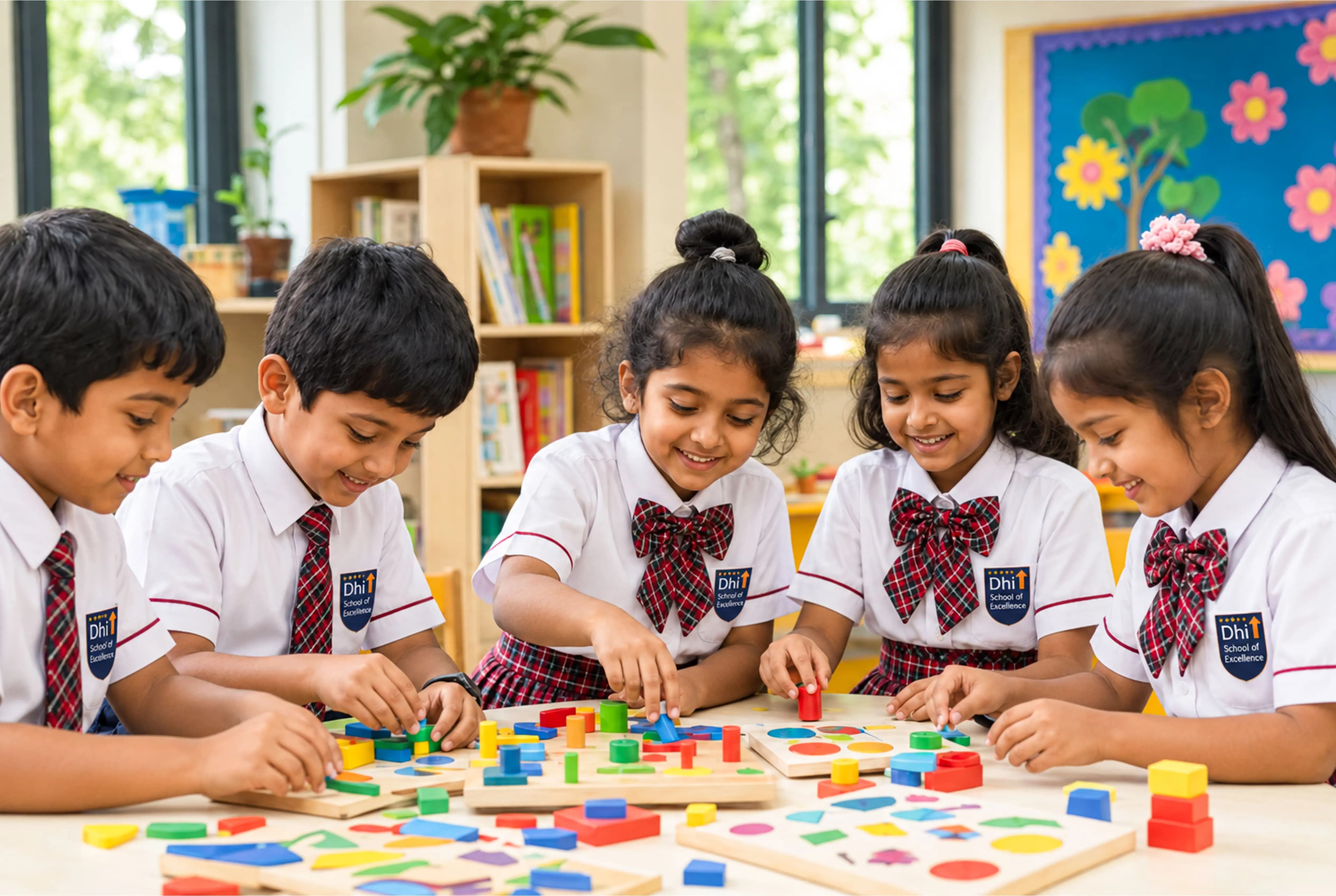
Children learn in many different ways. Sometimes it happens through a classroom lesson, sometimes through a conversation, and often through something as simple as play.
Games can be especially useful because they encourage children to think, remember, observe and make decisions without making learning feel like another task. A well-chosen game can ask a child to remember a pattern, solve a problem, notice a difference or think of a new way to reach to a solution.
These small challenges can help children build skills such as memory, concentration, reasoning and problem-solving over time.
The good thing is that parents do not need complicated equipment or expensive learning kits to get started. Many 10 Brain-Boosting Games can be played at home with things you already have around you.
Why Are Brain Games Useful for Children?
A child’s brain is constantly developing while interacting with the world around. Activities that make a child think, remember and respond can provide opportunities to practise important cognitive skills.
For example, a memory game can encourage a child to pay closer attention. A puzzle can help them understand relationships between different pieces of information. A word game can introduce new vocabulary while also encouraging quick thinking.
These activities are not meant to replace school learning. Instead, they can complement it by giving children alternate ways to explore ideas.
The key is to keep the experience enjoyable. When children are interested in what they are doing, they are more likely to stay engaged and try again when something does not work the first time.
1. Memory Card Game
A simple memory card game can become a useful exercise in concentration.
Place pairs of cards face down and let your child turn over two cards at a time. If the cards match, they keep the pair. If they do not, the cards are turned back over.
The child needs to remember where each card was placed and use that information in later turns.
You can make the game easier for younger children by starting with fewer pairs and gradually increasing the number.
This is one of the easiest 10 Brain-Boosting Games to introduce because it requires very little preparation while encouraging children to practise visual memory and concentration.
2. Puzzles
Puzzles encourage children to look at individual pieces while also thinking about the larger picture.
Start with age-appropriate puzzles and slowly increase the difficulty level. Encourage your child to look at colours, shapes, patterns and edges instead of simply giving them the answer when they get stuck.
Puzzles can also teach patience. A child may not find the right piece immediately, but continuing to try helps them understand that difficult problems can be solved step by step.
3. What's Missing?
Place five to ten familiar objects on a table and give your child a few seconds to look at them.
Ask them to close their eyes while you remove one object. When they look again, ask what is missing.
As your child becomes more comfortable with the game, add more objects or reduce the time they have to observe them.
This simple activity works on observation and memory while making children more aware of small details around them.
4. Story Chain
Start a story with one sentence.
For example:
"One morning, Riya found a small box near the garden."
Ask your child to add the next sentence. Continue taking turns and see how long the story can become.
To make it more challenging, ask your child to remember important details from earlier in the story.
Story chains encourage memory, language development, creativity and logical thinking at the same time. They can also help children understand how events connect to one another.
5. Sudoku for Kids
Sudoku does not have to be limited to the traditional adult version.
Younger children can start with simple picture or number grids where the goal is to place each symbol without repeating it in the same row or column.
As children become more comfortable, you can introduce larger and more challenging grids.
These brain activity games encourage children to recognise patterns, follow rules and think ahead before making a decision.
6. Spot the Difference
Give your child two similar pictures and ask them to find the differences between them.
You can begin with a few obvious differences and gradually choose more detailed pictures.
The game encourages children to slow down and observe carefully instead of looking at an image quickly.
It can be particularly useful for developing visual attention and concentration.
7. Word Association
Choose a simple word such as "school."
Your child then has to say a word connected to it, such as "teacher." You continue with another related word, such as "classroom," followed by "books" and so on.
For older children, add a time limit or ask them to explain why two words are connected.
Word association can build vocabulary while encouraging children to make connections between ideas.
Parents can play brain games like this during car rides, while waiting at a restaurant or even during a short break at home.
8. Build a Pattern
Use blocks, coloured pencils, beads or even household objects to create a pattern.
For example:
Red – Blue – Red – Blue – ?
Ask your child what should come next.
Once they understand simple patterns, make them more complex:
Red – Blue – Green – Red – Blue – ?
You can also ask your child to create a pattern for you to solve.
Pattern games help children recognise sequences and relationships, which are useful skills in mathematics and logical reasoning.
9. Riddles and "What Am I?" Games
Riddles encourage children to listen carefully to clues and connect different pieces of information.
For example:
"I have hands but cannot clap. What am I?"
As children become familiar with the game, encourage them to create their own riddles.
This turns the activity into more than answering questions. They also need to think about how to describe something without directly naming it.
These mind challenging games can encourage reasoning, vocabulary and creative thinking while keeping the interaction light and fun.
10. Treasure Hunt
A treasure hunt can turn problem-solving into an adventure.
Hide a small object somewhere at home and create a series of clues that lead your child from one place to another.
For younger children, use simple visual clues. Older children can be given riddles, numbers or word puzzles.
The game combines memory, reading, reasoning and problem-solving. It also encourages children to think independently instead of waiting for an adult to tell them exactly what to do.
Making Games Part of Everyday Learning
The purpose of these activities is not to make every moment of a child's day stick to education.
Children also need free play, rest and time to explore without a fixed outcome.
Instead, parents can introduce games naturally into everyday routines. A five-minute memory game before dinner or a quick word game during a car journey can be enough.
It is also important to choose games according to age and interest. A game that is too easy may become boring, while one that is too difficult can make a child lose interest.
The right level of challenge gives children a chance to think, make mistakes and try again.
This is where child growth and development becomes broader than academic performance. Children also need opportunities to build confidence, communication, curiosity, patience and independent thinking.
How Schools Can Support Learning Through Activities
The way children learn outside school can also connect with what happens inside the classroom.
A school environment that encourages children to ask questions, participate in activities and explore different ideas can make learning more engaging. Games, projects, discussions and practical activities can complement traditional classroom teaching by allowing children to use what they have learned.
At Dhi School of Excellence, the learning approach focuses on giving children opportunities to explore, participate and develop skills beyond textbook learning. Its curriculum and school environment are designed to support academic learning alongside broader development. Parents looking for schools where children can experience different forms of learning can explore Dhi School of Excellence and its campus through the school's official website.
For families exploring options such as the Best International Schools in kuntloor, a school that values curiosity and active participation can be worth considering alongside curriculum, teaching approach, infrastructure and the child's individual needs.
Dhi School of Excellence can also be explored by parents comparing options such as a CBSE School in LB Nagar or looking at the Best CBSE Schools in Nagole, depending on their preferred location and curriculum.
Parents planning ahead can also check whether school admission open announcements and application timelines are available for the relevant Dhi School campus.
Learning Can Start With Play
Children do not always need a worksheet, textbook or structured lesson to practise important skills.
A card game can teach memory. A puzzle can teach patience. A treasure hunt can encourage problem-solving. A story can strengthen language and imagination.
These activities may look like simple games, but they give children opportunities to observe, remember, question, experiment and find their own answers.
The most important thing is to let children enjoy the process. There does not always need to be a winner, a score or a correct answer. Sometimes, the value lies simply in giving a child a chance to think.
Final Thoughts
The best learning experiences often begin with curiosity. When children are encouraged to explore through play, they get opportunities to develop memory, concentration, reasoning and creativity in ways that feel natural to them. Parents can make this part of everyday life through simple activities such as puzzles, memory cards, riddles, stories and treasure hunts. At the same time, choosing a school that supports active learning and overall development can help reinforce these skills in the classroom. With the right balance of structured learning and playful exploration, children can gradually become more confident thinkers who are comfortable asking questions, trying new approaches and learning from their mistakes.